Plastics Research Council

Facts for a Brighter Future
An Independent Scientific Research Institute Formed to Share Peer-Reviewed Science on Plastics, Microplastics and Environment
iIndependent evidence review · August/September 2026
New Microplastics Evidence Review
What has been detected — and what has been proved
An 92-page assessment of microplastics, human health, exposure, analytical methods, accumulation, toxicology and real-world risk — based on more than 700 studies reviewed over seven years. This Q&A style report is for the public — an even more extensive microplastics review of 1500 studies aimed at scientists can be found here lower down on the page.
Reviewed by independent experts in medicine, toxicology, polymer science and engineering. No external funding.
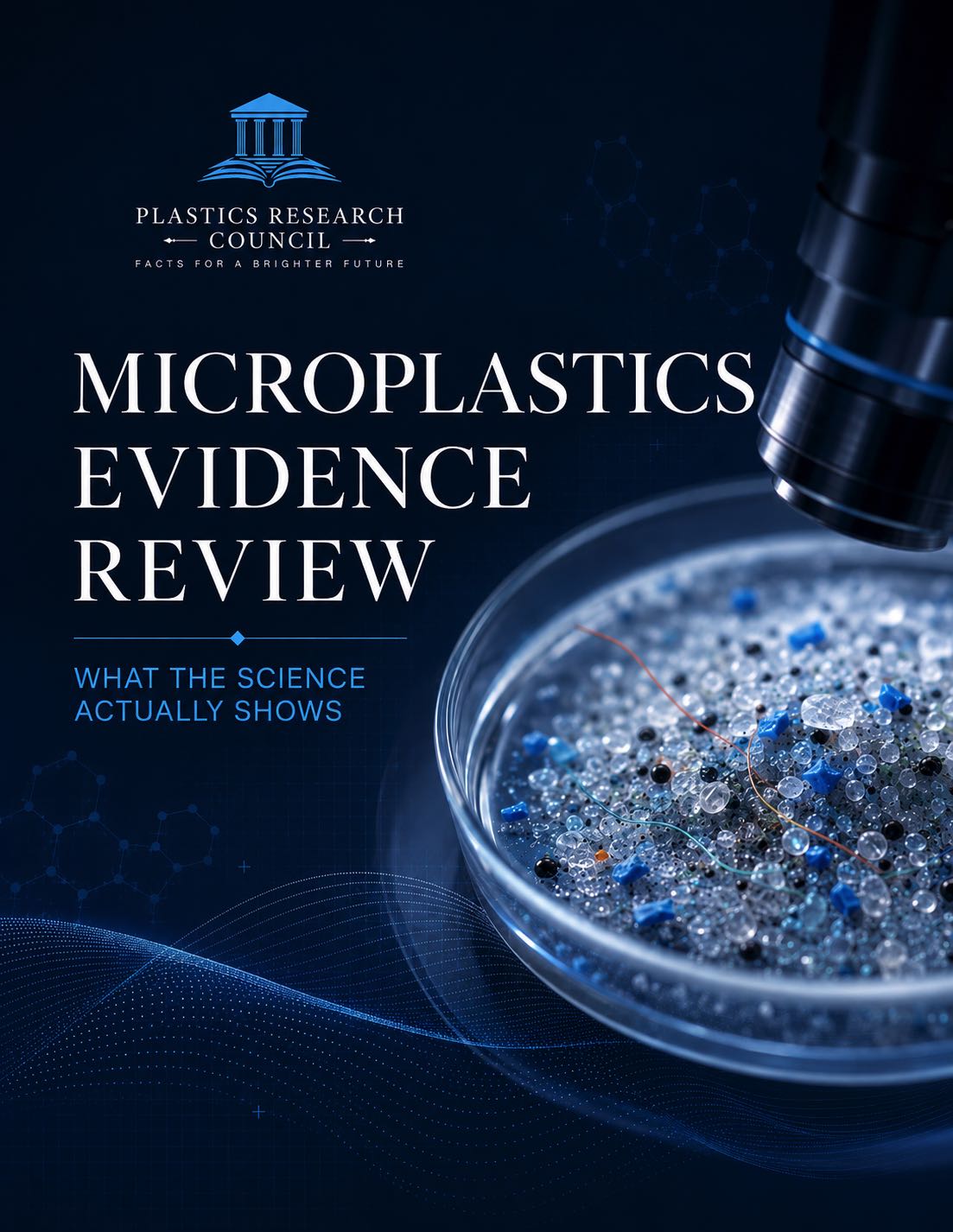

Download the new book Shattering The Plastics Illusion – a comprehensive review of the scientific literature on plastics, microplastics, waste, litter, ocean plastics and other topics related to plastic materials and their effects on the environment.
This follow-up to The Plastics Paradox, is based on a review of over 5000 peer-reviewed studies and has been endorsed by professors and other scientists world-wide.

Information Gathering
Staying abreast of thousands of peer-reviewed studies on materials, waste, litter, ocean plastics, degradation, microplastics and more.

Independent Expert Analysis
Data is meaningless without expert analysis, and that is where our team of renowned international professors & scientists tell you what it means.

Solutions that Work
Once the facts are known, solutions that are proven to actually work can be identified and presented to the public, companies and policy-makers.
About Us
Plastics Research Council
Plastics Research Council provides evidence-based research on plastics, microplastics, packaging, recycling, sustainability, plastic waste, environmental impact, life cycle assessment, toxicology, exposure science, and policy.
We are an independent, science-led source of trusted information helping decision-makers, media, educators, policymakers, industry leaders, and the public separate plastics facts from plastics misinformation.
Our position is simple:
We are pro-evidence.
We are material agnostic.
In a debate often shaped by emotion, selective data, activist messaging, and incomplete science, Plastics Research Council provides research-based insight grounded in peer-reviewed evidence, environmental data, material science, human health risk assessment, and life cycle analysis.
We examine the full picture, including plastics and the environment, microplastics evidence, packaging sustainability, recycling and circularity, plastic waste and litter, carbon impact, chemicals and additives, regulation, policy, and comparisons between plastic, paper, glass, metal, compostable, and reusable alternatives.
Where claims are supported by strong evidence, we will say so.
Where claims are exaggerated, incomplete, misleading, or unsupported, we will challenge them.
The goal is to lower environmental impact and support solutions that genuinely reduce impact, protect human health, prevent waste, and deliver better outcomes based on facts rather than fear.
Follow Plastics Research Council for trusted facts, peer-reviewed research, and evidence-based insight on plastics, microplastics, packaging, recycling, sustainability, and the environment.










Quoted in the media: Washington Post, The Telegraph, Reader’s Digest, Food & Wine, Home & Garden, Medcity News, Livingetc, Stylist, EatingWell, Prevention Health News, Plastics Recycling Compendium, IOM3, NAPCOR, Washington Times, Globe & Mail, USA Today, Huffpost, The Epoch Times, Daily Mail, CNN
There is a path to a brighter future, but it is not an easy one, and that is for three reasons.
Firstly, it is difficult to change people’s minds, and they are already brainwashed against plastics because lies repeated often enough are believed.
Secondly, the anti-plastics campaign is very well funded. Michael Bloomberg for example proudly stated that he gave $85M to create groups including Beyond Plastics who have a mandate not to protect the environment but to make attacks on plastic materials use.
Lastly, making up misinformation is easy, but finding the facts is not. It takes thousand of hours to read thousand of studies in order to get to the truth.
The Solution
Information for Students & Teachers
Unbiased Expert Reports
Media Interviews
Advising Policy Makers
Office Hours
Daily – 9:30 am to 5:30 pm (EST)